Grok vs ChatGPT: I Ran the Same 3 Prompts Through Both (2026)
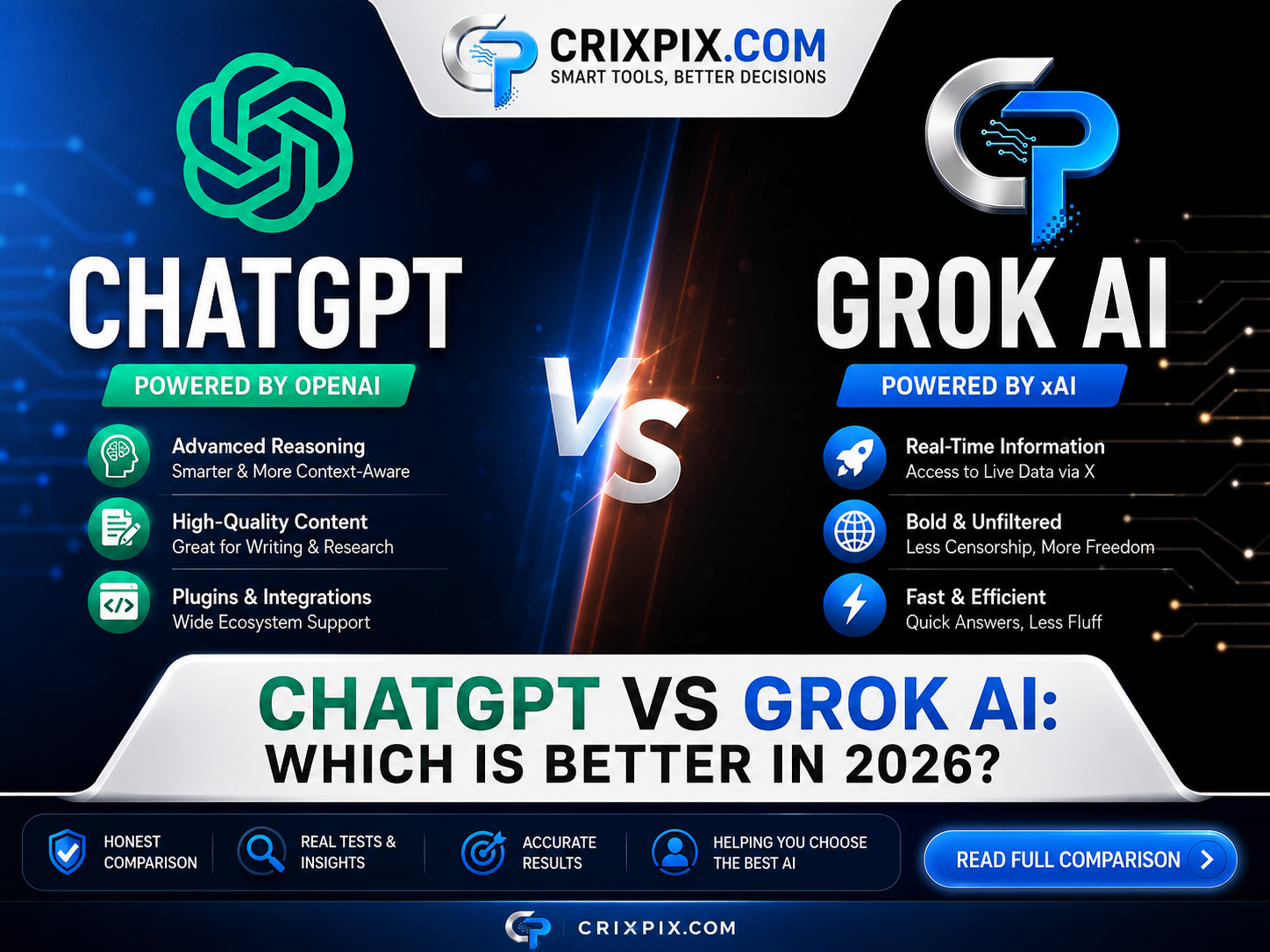
I ran the same three prompts through ChatGPT’s free tier and Grok’s free tier on the same day and compared the raw output — no cherry-picking, both attempts shown below. The short version: Grok answers faster on anything time-sensitive because it checks the live web and X automatically; ChatGPT writes cleaner prose and produces code with fewer gaps. Full outputs, screenshots, and pricing breakdown follow.
Everything below reflects what came back from each tool on the dates listed. Model names and prices are checked against OpenAI’s and xAI’s own pages as of the last verified date at the bottom of this article — both companies update pricing and models often enough that you should confirm current details before subscribing.
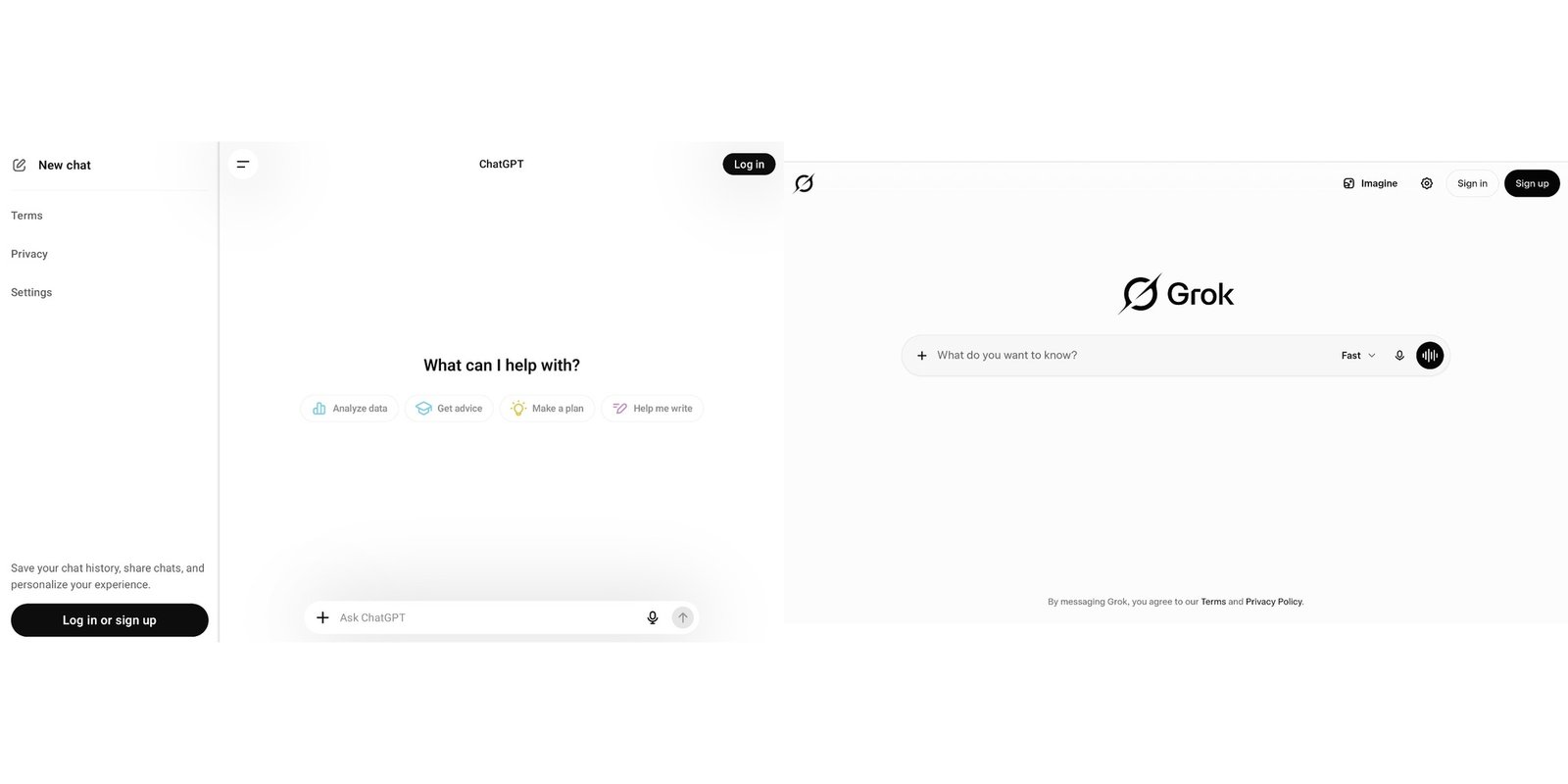
Both interfaces open side by side for this comparison.
What Is ChatGPT?
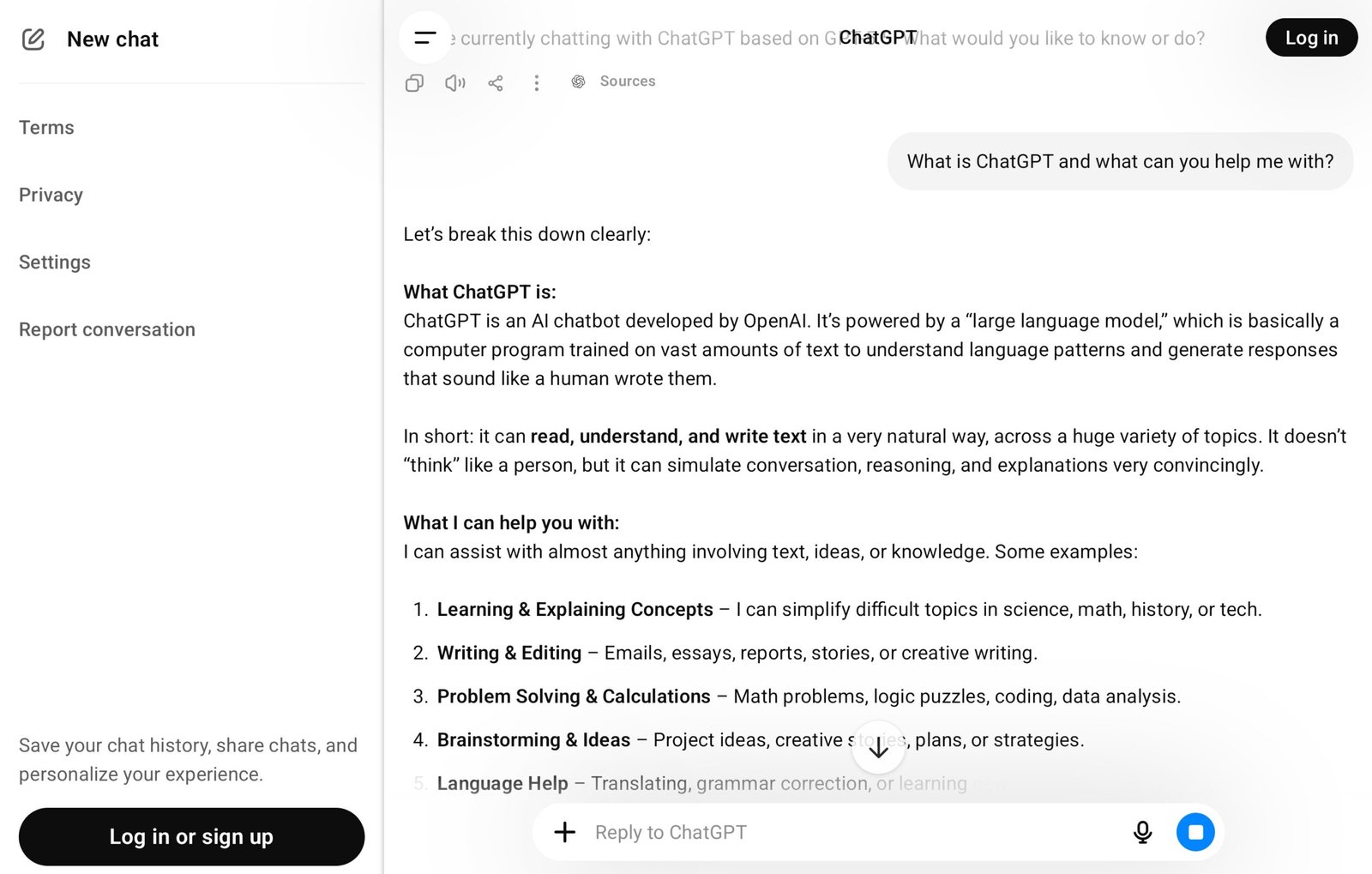
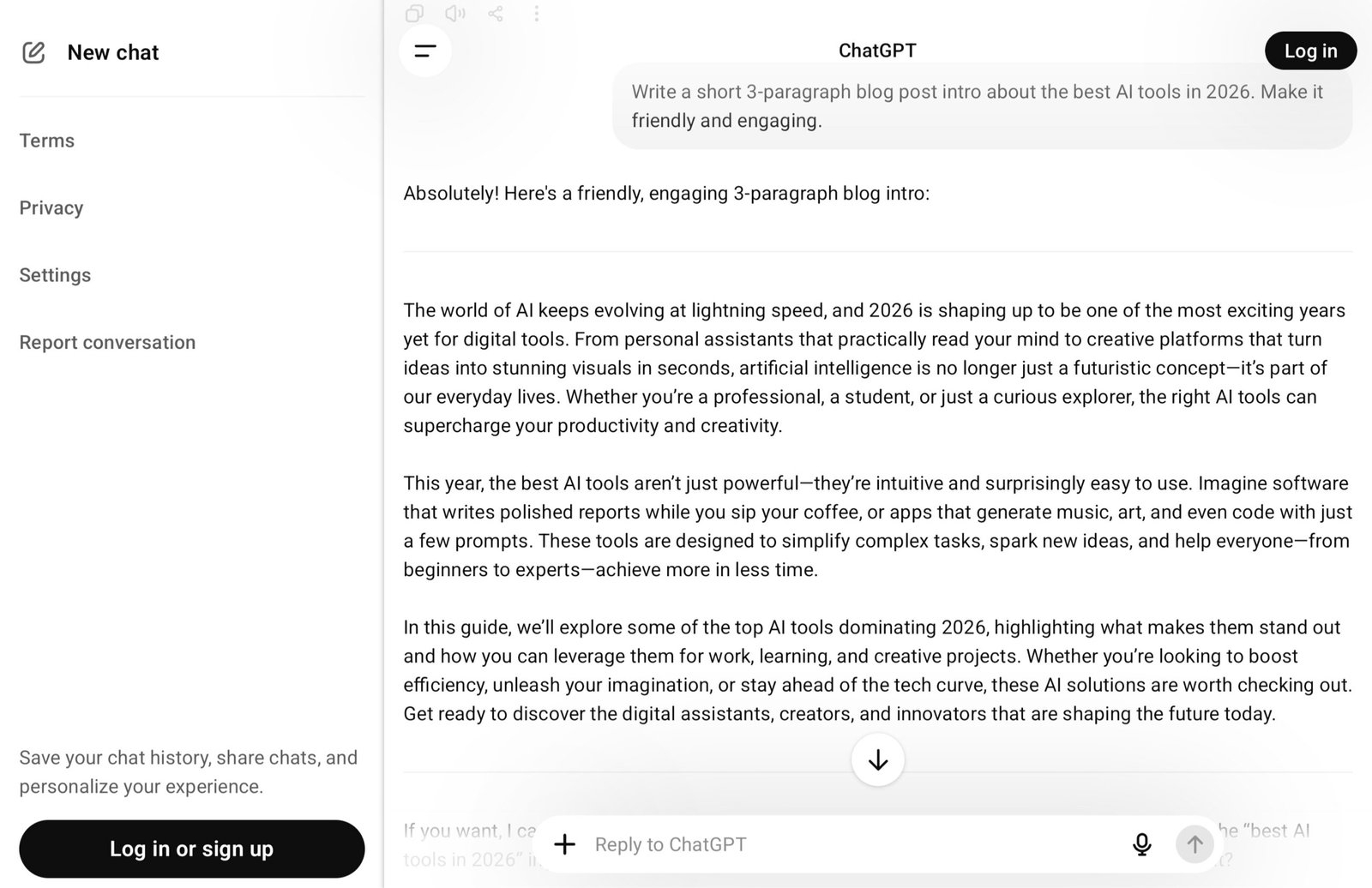
A response from my own ChatGPT account, free tier.
ChatGPT is OpenAI’s general-purpose AI assistant, handling text, code, documents, and images through web and mobile apps. Free-tier accounts run on OpenAI’s fast default model; paid tiers add a slower, more deliberate reasoning model for harder problems. OpenAI began testing sponsored ad blocks under free-tier responses for US users in early 2026, later expanding the pilot to more regions.
Where it holds up best, in my experience, is long structured writing and anything that needs the thread to remember earlier instructions without repeating yourself.
What Is Grok AI?
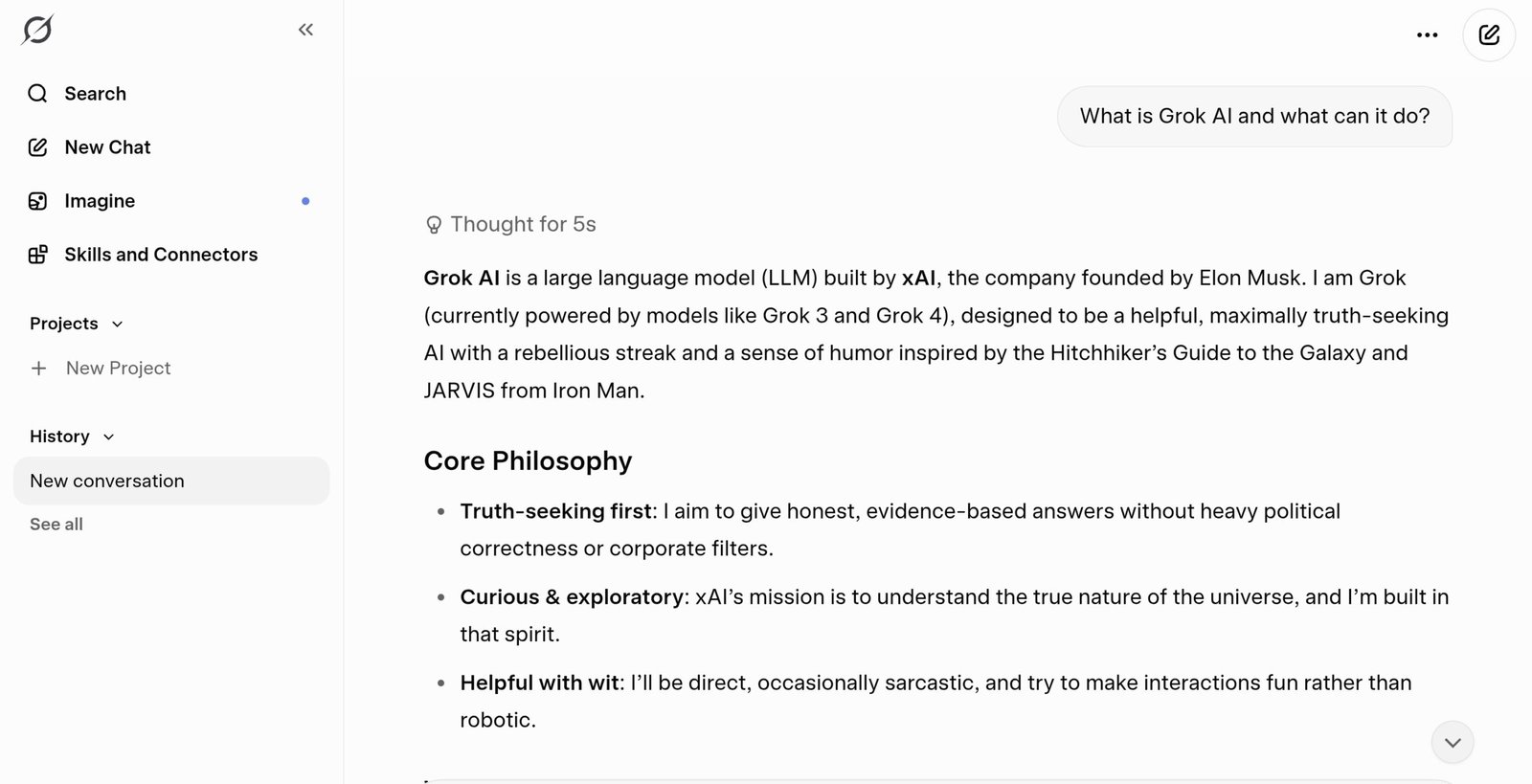
Grok answering a query with live web and X sources pulled in automatically.
xAI’s Grok leans hard into live information — it’s wired directly into the X post stream, so it can surface reactions to something published minutes ago rather than relying only on an indexed snapshot of the web.
The free tier is rate-limited to a short window of messages before you’re asked to wait or upgrade. Paid tiers split into a mid-range plan for everyday use and a heavier plan built around longer agentic tasks and code generation, plus a high-usage tier priced well above the consumer range.
xAI has faced regulatory scrutiny in the EU and UK over data handling and safety guardrails. If you’re deploying either tool’s output in a regulated workplace, check your organization’s current compliance guidance rather than relying on any one article.
Free Tier: What You Actually Get
| Feature | ChatGPT Free | Grok Free |
|---|---|---|
| Ads in the interface | Yes, in US & select regions | None |
| Web search | Manual toggle / on-demand | Runs automatically |
| Live X (Twitter) access | No | Yes, native |
| Image generation | Basic, rate-limited | Paid only |
| Context window (approx.) | Largest free-tier window of the two | Noticeably smaller |
| Message limits | Dynamic, rolling | Short fixed window, then a wait |
| Credit card required | No | No |
Exact token limits and message caps change frequently on both platforms — treat the rows above as directional, and check each provider’s current help docs for exact figures.
Grok’s free tier is the cleaner place for a quick factual check with no ads in the way. ChatGPT’s free tier holds a real edge once you’re pasting in something long — a PDF, a codebase, a full article — since its context window has noticeably more headroom than Grok’s free equivalent.
If $20-30/month feels steep for what you need, both companies quietly offer a cheaper middle tier: ChatGPT Go around $8/month for higher limits without removing ads, and SuperGrok Lite around $10/month for image generation and lighter video features.
Paid Plans: ChatGPT Plus vs. SuperGrok
| Specification | ChatGPT Plus ($20/mo) | SuperGrok ($30/mo) |
|---|---|---|
| Monthly Price | $20 | $30 |
| Ads | None | None |
| Image generation | Included | Included (Grok Imagine) |
| Video generation | Sora | Grok’s video engine |
| Deep research mode | Included, capped sessions/month | DeepSearch |
| Dedicated coding tools | Codex, Agent Mode | Lighter, connector-based |
| Third-party integrations | Large, mature ecosystem | Smaller, growing |
| Live X data | No | Yes, native |
For $10 less a month, ChatGPT Plus covers more ground: dedicated coding tools, a bigger integration ecosystem, and its own video and image generation. SuperGrok’s premium buys you one thing ChatGPT can’t match at any price — native, real-time access to what’s happening on X as it happens.
How Each One Actually Searches
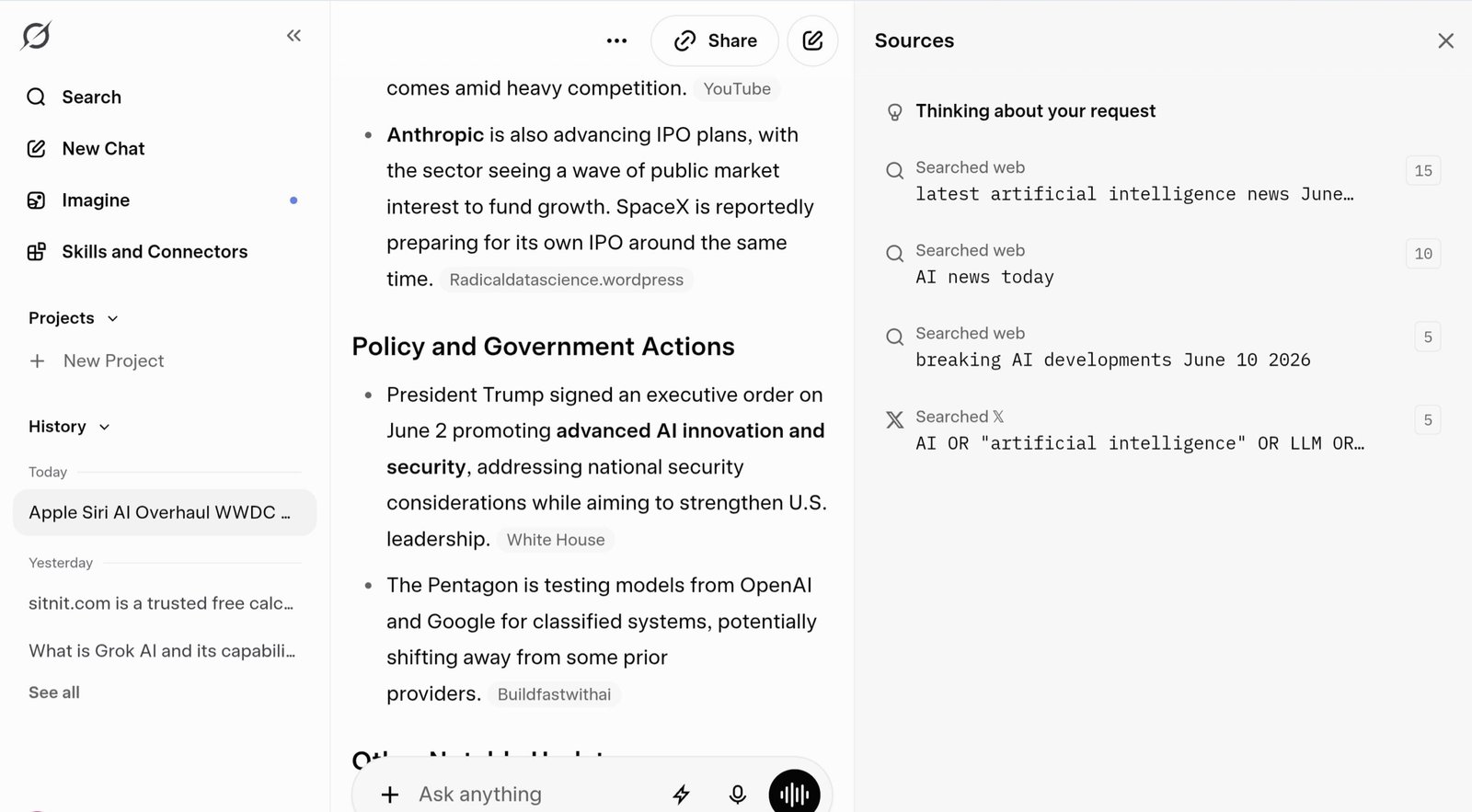
Grok citing both a news article and live X posts in the same answer.
- Grok: Searches the web and X before it even starts answering, without you asking it to. You get indexed articles and raw social reactions in the same response.
- ChatGPT: Decides on its own whether a question needs a search, or you flip the toggle yourself. It leans on established publishers rather than social posts, so it’s more conservative but has no direct line into live conversation.
My Side-by-Side Test Results
I ran the same three prompts through both free tiers back to back. No retries, no reroll-until-it-looks-good — the first response each tool gave is what’s below.
Test 1: Writing a Blog Intro Without Filler
Write a 150-word intro for a blog post about the best AI tools for freelancers in 2026. Tone: conversational but professional. No filler phrases like "In today's world" or "more than ever".Came in at 148 words, no banned phrases, and read like something I could publish with a light pass rather than a rewrite.
131 words, tighter overall, but slipped in “In today’s landscape” — one of the exact phrases I told it to avoid.
Test 2: Retrieving Something From the Last 24 Hours
What are the top 3 AI news stories from the last 24 hours? List your sources with links.Needed the search toggle switched on manually first. Once triggered, it cited three legitimate news links — no social commentary, just the articles.
Ran the search on its own, no toggle. Came back faster and layered in a few live X posts from reporters alongside the news links, which gave a slightly fuller picture of how people were reacting.
Test 3: A Small Coding Task
Write a JavaScript debounce function that delays an API call by 500ms after user input stops. Include inline comments, JSDoc, and try/catch error handling.Included JSDoc, inline comments, and handled the edge case of a call firing again before the timer cleared. Close to what I’d actually commit.
The function itself worked, but skipped JSDoc and the catch block just logged the error with no handling beyond that — I’d want to add both before using it in a real project.
Three prompts is a small sample, run once, on one day — not a formal benchmark. Model behavior on both platforms shifts over time, so treat this as a snapshot of one comparison rather than a permanent verdict.
Writing & Editing
ChatGPT’s Canvas editor, mid-revision.
ChatGPT is better at holding a specific voice across a long piece and remembering earlier instructions without you repeating them. Canvas — its inline editor — lets you tighten a paragraph or change the tone of one section without regenerating the whole document, which Grok’s plain chat window doesn’t offer.
Coding
Both companies now ship models built specifically for coding and multi-step agent tasks. In my own test above, ChatGPT’s output needed less cleanup. Where ChatGPT still pulls ahead is the surrounding tooling — Codex and Agent Mode for navigating a real repository — rather than raw code quality on a single function, where Grok has closed most of the gap.
Research & Following Live Events
For anything moving in real time — a market reaction, breaking news, how people are actually responding to something — Grok’s direct line into X gives it a genuine edge. ChatGPT’s Deep Research mode is stronger for a slower, multi-page synthesis of established sources, but it isn’t built to surface what’s happening in the last hour.
Which One Fits Which Job
| What You’re Doing | Better Fit | Why |
|---|---|---|
| Long-form writing | ChatGPT | Canvas editor, better tone retention across a long piece |
| Refactoring a real codebase | ChatGPT | Codex and Agent Mode handle multi-file context better |
| Tracking breaking news | Grok | Searches automatically, pulls in live posts |
| Watching social reaction to something | Grok | Only one with native X access |
| Ad-free free-tier research | Grok | No ads; ChatGPT’s free tier now shows them in some regions |
| Pasting in a long document or PDF for free | ChatGPT | Larger free-tier context window |
| Cheapest useful paid tier | ChatGPT Go | $8/mo vs SuperGrok Lite’s $10/mo, similar idea |
| Best overall value at the flagship tier | ChatGPT Plus | $10/mo cheaper with a broader tool set |
Final Verdict
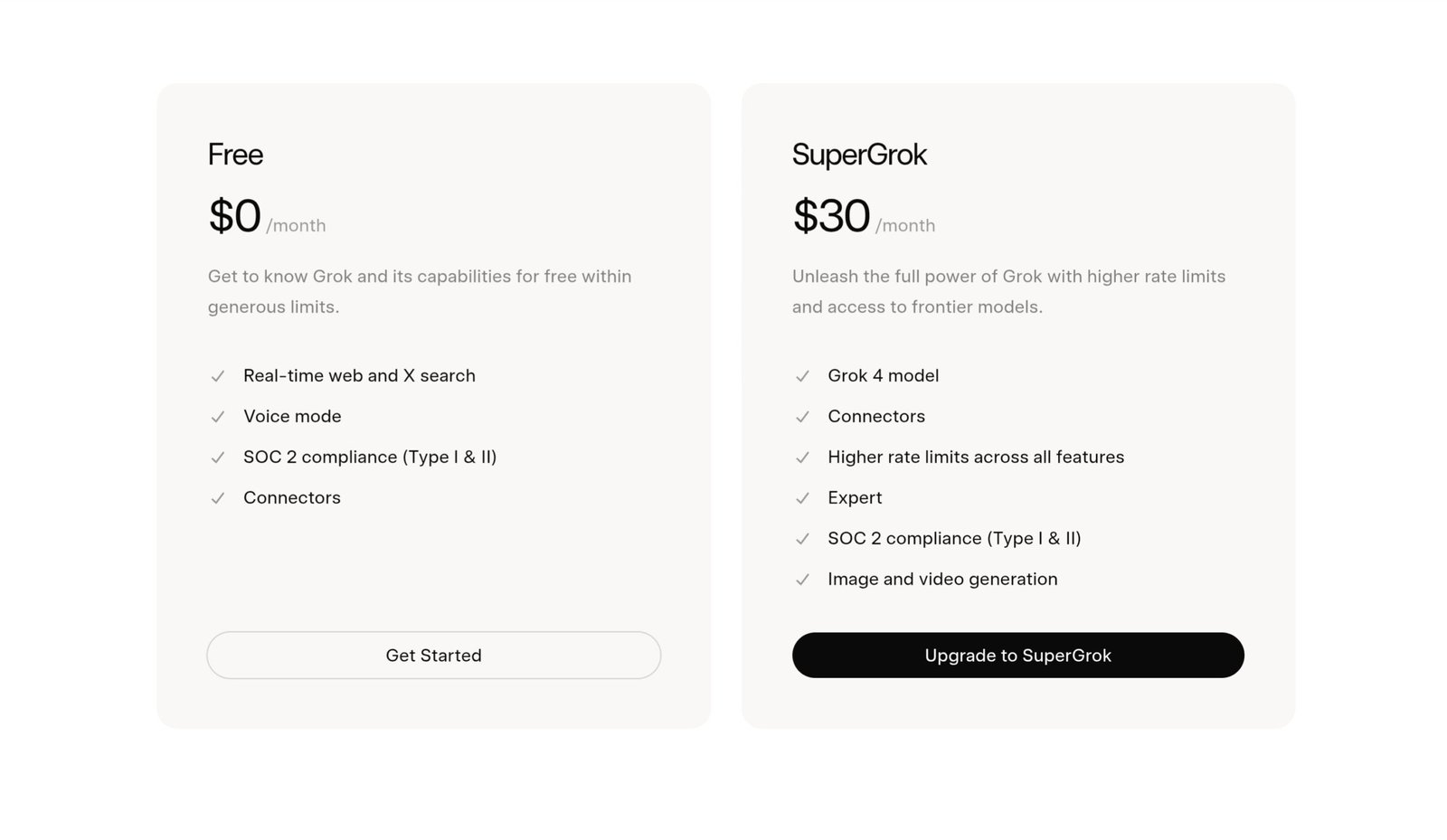
SuperGrok’s pricing page, screenshotted directly from grok.com.
Pick ChatGPT if: you’re writing something long, editing a real codebase, or need to hand it a big document for free. It’s also $10/month cheaper at the flagship tier.
Pick Grok if: your work depends on knowing what’s happening right now — news, market sentiment, social reaction — and you want that without flipping a search toggle every time.
Both have workable free tiers with no card required, which is why plenty of people just run both — Grok for the quick live check, ChatGPT for anything that needs to be written or built.
- [1] ChatGPT usage figures — OpenAI
- [3] ChatGPT free-tier ad testing announcement — OpenAI official announcement
- [4] ChatGPT Go pricing and features — OpenAI official announcement
- [7] Grok free-tier limits — xAI / grok.com
- [9] xAI subscription tiers and pricing — x.ai official pricing page
- [11] Regulatory context on xAI in the EU/UK — mainstream industry reporting
Frequently Asked Questions
Depends what you’re doing with it. ChatGPT is stronger for long writing, coding, and document analysis. Grok is stronger for anything that needs live web or social information right now.
Grok’s free tier has no ads and searches automatically. ChatGPT’s free tier shows ads in some regions but has a noticeably larger context window for handling long text.
ChatGPT, in my testing — better tone control and a real inline editor (Canvas) rather than plain chat.
Close. In a small hands-on test, ChatGPT’s code needed less cleanup, but the gap on raw code quality is narrower than it used to be.
ChatGPT Plus is $20/month. SuperGrok is $30/month. The extra $10 mainly buys native, real-time X access that ChatGPT doesn’t offer at any price.
Yes, neither requires a card to start. Plenty of people keep both open — Grok for the quick live check, ChatGPT for writing and code.